Is science healthy? How do rigor and reproducibility vary across fields, journals, and institutions?
At The Metascience Observatory, we are using AI to analyze scientific papers at scale to help answer these questions.

Projects
Projects
Forensic Metascience AI toolkit
An AI toolkit with 30+ tools for detecting statistical inconsistencies and data-integrity anomalies in scientific papers. Read more →·View findings →
Replications Database
The world's largest collection of information on replication experiments. Read more →
Bird's Eye Reviews
A new form of AI-powered high-level literature review where results are displayed in an interactive dashboard. Read more →·View Long COVID review →
The Metascience Observatory Explorer
Integrating open source scientometrics data into one unified interface. Visit →
Team
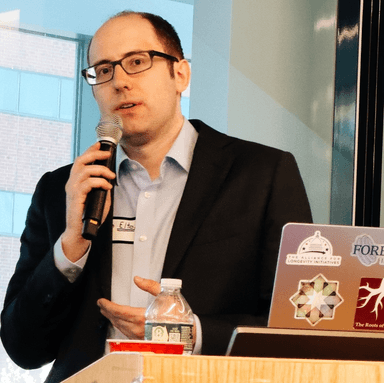
Dan Elton, Ph.D.- Founder and Director
Dan spent 15 years in academic research before founding The Metascience Observatory. He has co-authored over 40 peer-reviewed papers in physics, materials science, and AI for healthcare. On his Substack he writes about AI, progress, metascience, and other topics.
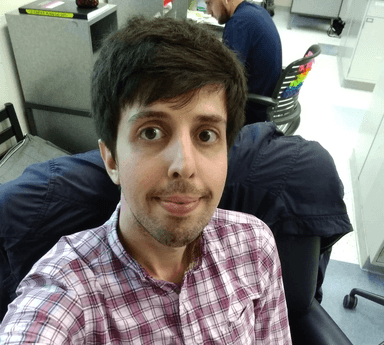
Greg Fitzgerald, Ph.D.- Meta-Analysis and Statistics Expert
Greg Fitzgerald is a behavioral neuroscientist with expertise in meta-analysis and evidence synthesis. He obtained his Ph.D. in Neuroscience from the State University of New York, Albany. His website is greg-fitzgerald.com.
Collaborators
Since October 2026 we have been working with Flavio Azevedo, Lukas Wallrich, and Lukas Röseler from FORRT to merge our replications database project in with their FLoRA effort. FORRT (Framework for Open and Reproducible Research Training) is a global volunteer-led initiative “advancing research transparency, reproducibility, rigor, and ethics through pedagogical reform and meta-scientific research.”

Donate
The Metascience Observatory is fiscally sponsored by Mind First Foundation, a 501(c)(3) nonprofit, so your donation is tax-deductible. The Mind First Foundation charges 0% overhead, so 100% of your donation goes directly to Metascience Observatory work.
Donate via ManifundDonate via PayPal